5 Minutes Epoxy Adhesive Formula(eBook PDF)
5 Minutes Epoxy Adhesive Formula(eBook PDF)
Couldn't load pickup availability

5 Minutes Epoxy Adhesive Formula(eBook PDF)
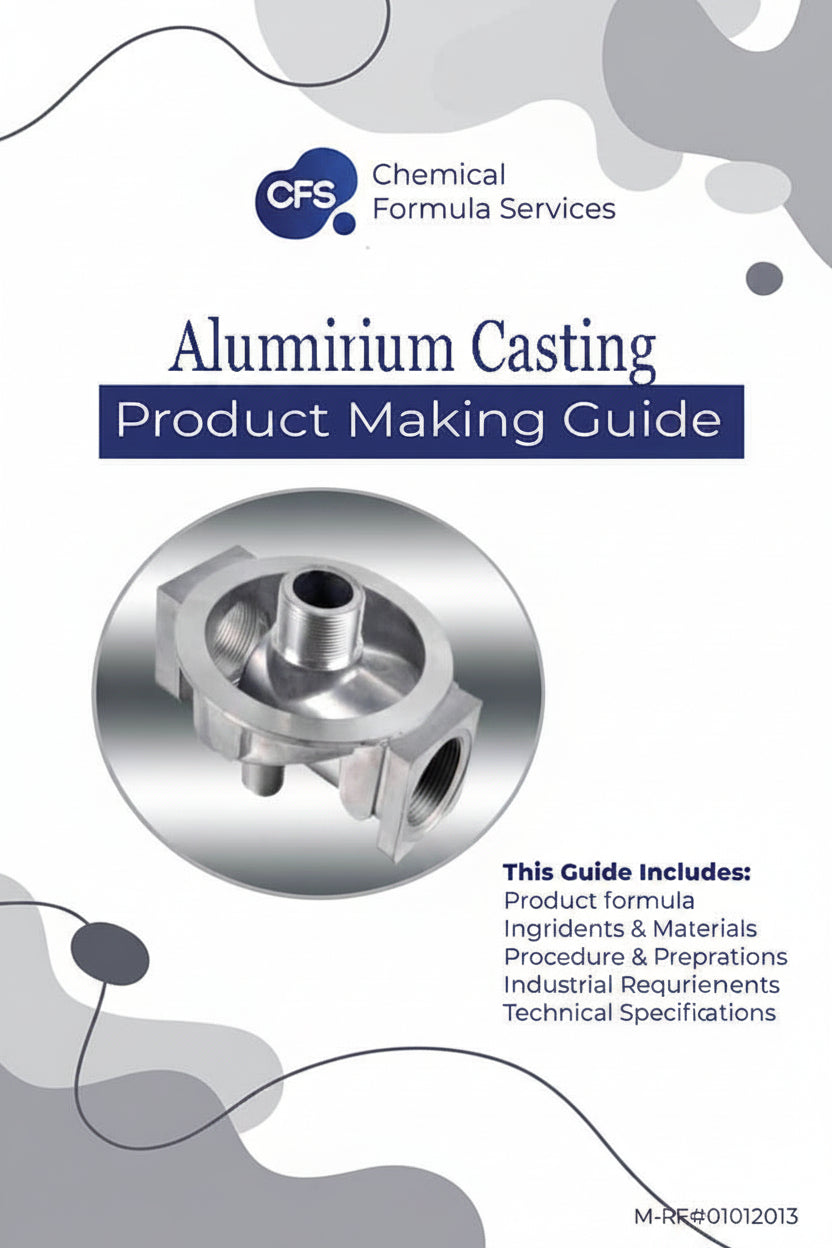
Aluminum Casting Processing Formula - Complete Product Making Guide of Aluminum Casting Processing Formulation Manufacturing for Startups, Established Businesses, and Manufacturers
Aluminum Casting Processing Formula is a manufacturing process that involves pouring molten aluminum into a mold to create a specific shape or component. It is a widely used method for producing a variety of aluminum products, ranging from small intricate parts to large and complex structures. Aluminum casting is popular due to the versatility of aluminum as a material, its lightweight properties, and its excellent strength-to-weight ratio. The aluminum casting material plays a very important role in the making of its grade.
In industrial metallurgy and process engineering, Chemical Formulation Services and Chemical Formula Services are essential for optimizing alloy composition and melt stability. Proper Formulation Development ensures consistent mechanical properties during solidification, guided by an expert Formulation Chemist working within a controlled Formulation Factory under the supervision of a skilled Formulation Scientist to achieve reliable industrial casting performance.
Types of Aluminum Casting Processing Formula processes
- Sand Casting: Sand casting is one of the oldest and most common aluminum casting processes. In this process, a pattern of the desired part is made from wood, metal, or plastic. The pattern is placed in sand to create a mold cavity. Molten aluminum is then poured into the mold, where it solidifies, and the sand is removed to reveal the cast part.
- Die Casting: Die casting is a more precise and efficient aluminum casting process used for producing high-volume, complex, and accurate parts. It involves forcing molten aluminum into a steel mold, called a die, under high pressure. Die casting is commonly used for manufacturing automotive components, consumer electronics, and other intricate parts.
- Investment Casting: Also known as lost-wax casting, investment casting is a process that uses a wax pattern to create the mold. The wax pattern is coated with a ceramic material to form a shell. Once the ceramic shell is heated, the wax melts and is "lost," leaving a cavity in the mold. Molten aluminum is then poured into the cavity, creating the final part.
- Permanent Mold Casting: In permanent mold casting, reusable molds made from steel or other materials are used to create aluminum parts. The molten aluminum is poured into the mold and allowed to solidify before the part is removed. Permanent mold casting is commonly used for producing items like pipes, fittings, and other components.
- Centrifugal Casting: Centrifugal casting involves rotating a mold while pouring molten aluminum into it. The centrifugal force ensures that the aluminum fills the mold evenly, resulting in parts with good surface finish and enhanced mechanical properties.
Common types of casting materials
- Aluminum Alloys: Aluminum alloys are the most common material for casting. They offer a good balance of strength, corrosion resistance, and cost-effectiveness. Some popular aluminum casting processing alloys include:
- Aluminum-Silicon (Al-Si) Alloys: These alloys, such as A356 and 356, are widely used in applications like automotive parts and general engineering due to their good castability and heat resistance.
- Aluminum-Copper (Al-Cu) Alloys: Alloys like 201, 202, and 206 offer improved strength and wear resistance. They are used in aerospace and high-stress applications.
- Aluminum-Magnesium (Al-Mg) Alloys: Alloys like 535 and 514 are known for their lightweight properties and good corrosion resistance. They are used in industries like aerospace and marine.
- Aluminum-Zinc (Al-Zn) Alloys: Alloys like 713 and 771 are known for their high strength and hardness. They are used in applications requiring elevated temperature resistance.
In modern foundry operations, Chemical Formulation Services support melt optimization and defect reduction, while Chemical Formula Services ensure consistent alloy chemistry across batches. Advanced Formulation Development improves casting flow, solidification control, and structural integrity, with input from a Formulation Chemist and validation in a Formulation Factory under the supervision of a Formulation Scientist to maintain industrial-grade quality standards.
Aluminum casting offers numerous advantages, such as the ability to create complex shapes, cost-effectiveness in large-scale production, and good mechanical properties. However, it requires proper handling of molten metal and compliance with safety regulations to ensure a safe working environment.