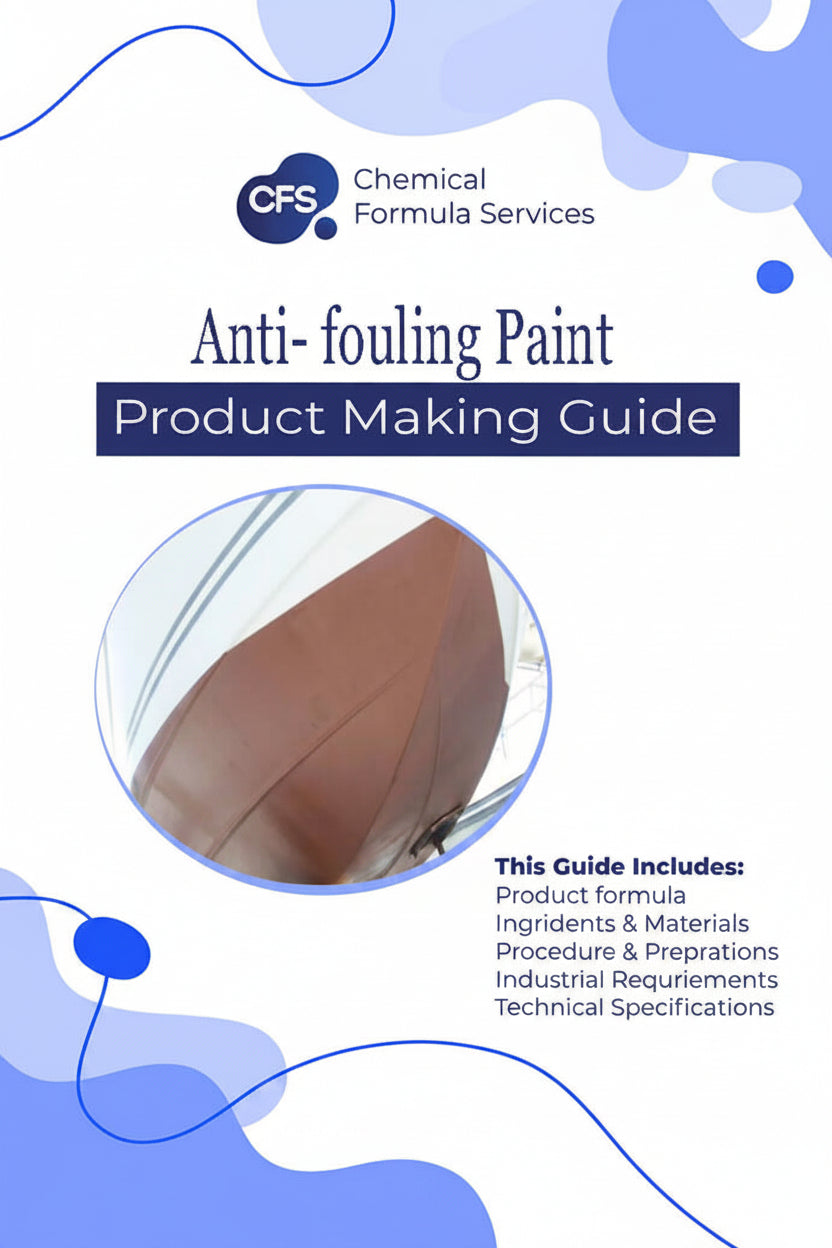
Anti-Fouling Paint Formulation
Regular price
$75.00
Regular price
$75.00
Sale price
Unit price
/
per
Couldn't load pickup availability
 
add_shopping_cart
-
Ordered
local_shipping
- - -
Order Ready
redeem
- - -
Delivered
Anti-Fouling Paint Formulation
Regular price
$75.00
Regular price
$75.00
Sale price
Unit price
/
per
\n
\n
\n
\n
\nÊAnti- fouling Paint formulation , also known as antifouling paint, is a specialized type of marine paint used to protect the underwater hull of ships, boats, and other watercraft from marine fouling. Fouling refers to the accumulation of marine organisms, such as algae, barnacles, mussels, and other organisms, on the submerged surfaces of vessels. These organisms can cause drag, reduce fuel efficiency, and damage the hull over time.
\n
\nThe primary purpose of anti-fouling paint is to create a toxic or repellent environment for marine organisms, preventing them from attaching and growing on the hull. This helps maintain the vessel's performance, improve fuel economy, and reduce the need for frequent hull cleaning or maintenance.
\n
\nKey features of the formulation
\n-
\n
- Biocides: Anti- fouling Paint formulation contains biocides or antifouling agents that deter the settlement and growth of marine organisms. Commonly used biocides include copper compounds, such as cuprous oxide or copper thiocyanate. There are some other organic compounds that are effective against fouling organisms. \n
- Leaching: The biocides in anti-fouling paint leach slowly from the paint film over time. As the vessel moves through the water, a controlled release of the biocides occurs, creating a toxic environment for fouling organisms in contact with the hull. \n
- Color Variants: Anti-fouling paints are available in different colors, such as red, blue, black, or green. The color choice may affect the effectiveness and longevity of the anti-fouling properties. \n
Types of Anti-Fouling Paint
\nThere are different types of anti-fouling paints, including hard, ablative, and hybrid paints. Hard paints create a smooth and durable surface that continuously releases biocides. Ablative paints wear away over time, exposing fresh biocides as the paint erodes. Hybrid paints combine features of both hard and ablative paints. \n-
\n
- Environmental Considerations: Due to environmental concerns about the impact of certain biocides on marine ecosystems .The regulations have been introduced to limit or ban the use of harmful compounds in anti-fouling paints. Many modern anti-fouling paints have the abilities toÊ more environmentally friendly, with reduced levels of toxic substances. \n