Automotive Paint Thinner Formula(eBook PDF)
Automotive Paint Thinner Formula(eBook PDF)
Couldn't load pickup availability

Automotive Paint Thinner Formula(eBook PDF)
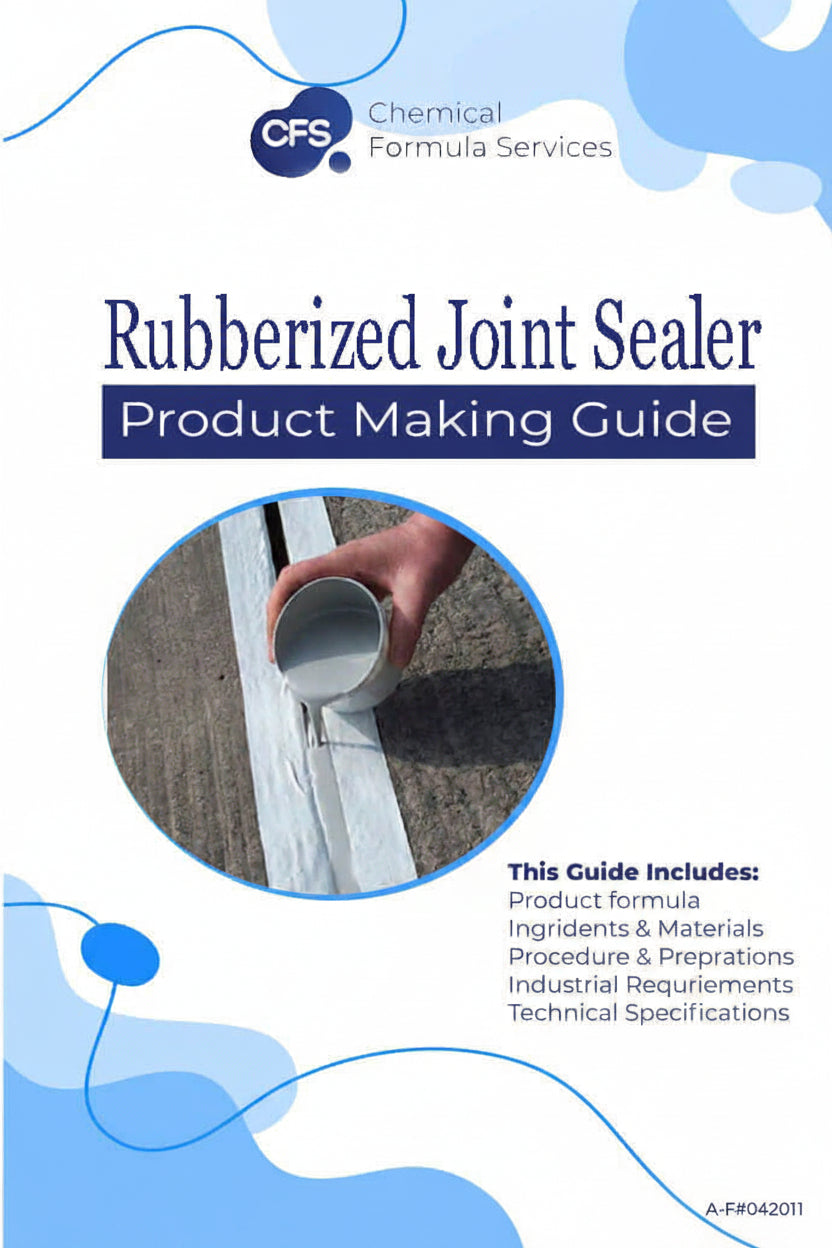
Asphalt Rubber joint Sealant Formula - Complete Product Making Guide of Asphalt Rubber joint Sealant Formulation Manufacturing for Startups, Established Businesses, and Manufacturers
Asphalt Rubber Joint Sealant Formula (Asphalt Rubber Joint Sealant Formulation)
Asphalt rubber joint sealant formula, also known as rubberized asphalt or rubberized joint sealant, is a specialized construction material developed under Chemical Formula Services used for filling and sealing joints in asphalt pavements and concrete structures. The Asphalt Rubber Joint Sealant Formulation, enhanced through Chemical Formulation Services, is designed to provide a flexible, durable, and watertight seal capable of withstanding mechanical stress, temperature variations, and structural movement.
This formulation is developed through structured Formulation Development, guided by an experienced Formulation Chemist, produced in a controlled Formulation Factory, and validated by a professional Formulation Scientist to ensure long-term sealing performance and structural reliability.
Asphalt Joint Sealing Formula Key Features
Composition
Asphalt rubber joint sealant is typically made by blending asphalt cement, a petroleum-based binder, with crumb rubber derived from recycled tires. The crumb rubber is finely ground and mixed with asphalt cement to form a rubberized binder.
This composition is optimized under Chemical Formula Services and refined through Chemical Formulation Services to ensure superior elasticity and bonding strength.
Benefits
The addition of crumb rubber improves flexibility, elasticity, and resistance to cracking. It enhances adhesion to substrates and improves resistance to water infiltration, making it suitable for dynamic joint conditions.
These performance characteristics are improved through advanced Formulation Development, while a Formulation Chemist ensures material compatibility and stability.
Application
Asphalt rubber joint sealant is applied using pouring, troweling, or hot-applied melter equipment. It fills joints or cracks and forms a flexible seal upon cooling and solidification.
Application systems are standardized in a Formulation Factory, ensuring consistent industrial performance across batches.
Compatibility
Asphalt rubber joint sealant is compatible with asphalt pavements, concrete structures, and other construction materials. It is widely used in roadways, highways, airport runways, parking lots, and bridge decks.
The Formulation Scientist ensures compatibility testing across multiple substrate conditions for long-term durability.
Durability
Rubberized asphalt sealants are known for their long-lasting performance. They withstand temperature fluctuations, weather exposure, and traffic loads without losing sealing integrity.
These properties are optimized through Chemical Formula Services and continuous Chemical Formulation Services development.
Maintenance
Over time, sealants may degrade due to UV exposure, chemicals, and traffic stress. Regular inspection and maintenance are required to ensure continued effectiveness. Damaged sealant should be replaced to maintain structural integrity.
Maintenance performance is evaluated through Formulation Development and quality control testing led by a Formulation Scientist.
Safety Considerations
During application of Asphalt Rubber Joint Sealant Formulation, safety guidelines must be followed, including proper PPE usage and adequate ventilation. Heating processes may generate fumes, so precautions are essential.
A Formulation Chemist ensures safe processing parameters, while Chemical Formulation Services and Chemical Formula Services provide safety and compliance standards during manufacturing.
Asphalt Rubber Sealant Formula Guide
This Asphalt Rubber Joint Sealant Formula is used when space between concrete slabs is filled using polypropylene tow saturated with cationic asphalt emulsion. The tow may be saturated before or after insertion into the joint or crack. Multiple layers can be used to fill up to a specified depth, followed by additional emulsion to level the surface.
A polymer-modified asphalt composition consists of asphalt, oil, polymer additives, and ionomers. This system is used in sealants to fill and bond cracks or joints in concrete or asphalt structures. The sealant is applied in sufficient quantity to fill voids and then cured to form a strong bond.
The mixture is prepared by heating asphalt, oil, polymer additives, aggregates, and ionomers, then blending until uniform consistency is achieved.
This entire system is developed under Chemical Formula Services, refined through Chemical Formulation Services, optimized via Formulation Development, guided by a Formulation Chemist, produced in a controlled Formulation Factory, and validated by a Formulation Scientist for industrial-grade performance.