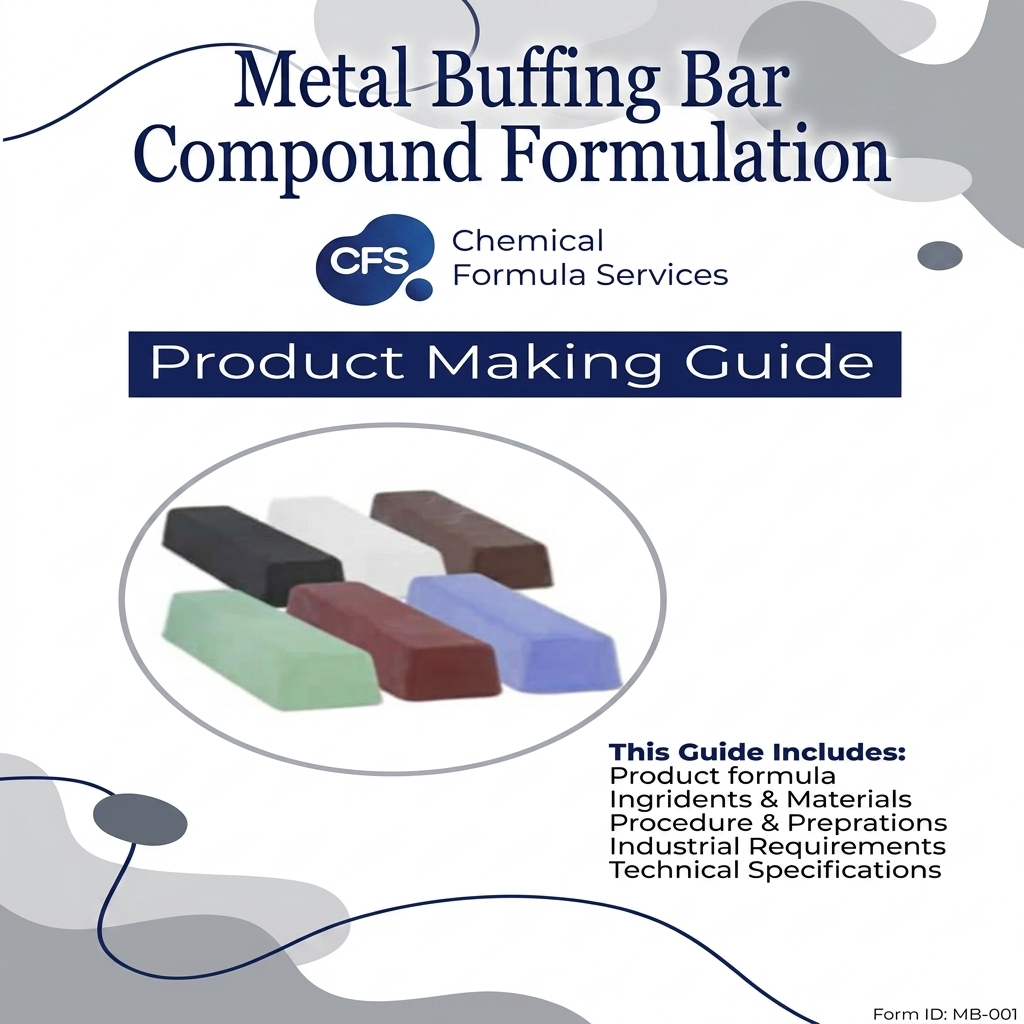
Metal Buffing Bar Compound Formulation
Metal Buffing Bar Compound Formulation
Couldn't load pickup availability

Metal Buffing Bar Compound Formulation
Metal Buffing Bar Compound Formulation - Complete Guide to Metal Buffing Bar Compound Formula Manufacturing
The global metal finishing and surface polishing industry continues to expand as manufacturers, automotive workshops, metal fabricators, jewelry producers, and industrial polishing businesses seek advanced polishing solutions that deliver superior shine, smoothness, and surface refinement. Among the most essential products in this industry is the Metal Buffing Bar Compound Formula, a specialized polishing compound designed to remove imperfections, smooth rough surfaces, and produce high-gloss finishes on various materials.
A professionally engineered Metal Buffing Bar Compound Formulation combines carefully selected abrasives, binders, lubricants, waxes, and polishing additives to create a high-performance buffing compound suitable for industrial and commercial polishing operations. These compounds are widely used for polishing metals, plastics, acrylics, jewelry, stainless steel, aluminum, brass, copper, and even wood surfaces.
At Chemical Formula Services, we provide advanced Chemical Formulation Services for polishing compound manufacturers, industrial chemical companies, and private label production businesses worldwide. Our experienced Formulation Chemist experts and skilled Formulation Scientist teams specialize in innovative Formulation Development solutions that help businesses create premium polishing compounds through scalable and efficient Formulation Factory systems.
This comprehensive guide explores the chemistry, ingredients, manufacturing process, applications, troubleshooting methods, and business opportunities associated with modern buffing compound technology.
What is Metal Buffing Bar Compound Formula?
A Metal Buffing Bar Compound Formula is a solid polishing compound designed to improve surface smoothness, eliminate scratches, remove oxidation, and create a bright reflective finish on metal and non-metal surfaces. The compound is generally applied using a rotating buffing wheel or polishing pad that transfers the abrasive and polishing agents onto the target surface.
Buffing compounds are available in different grades and abrasive strengths depending on the material being polished and the desired finish quality.
A professionally developed Metal Buffing Bar Compound Formulation typically contains:
- Abrasive particles
- Waxes
- Grease binders
- Lubricants
- Coloring agents
- Resins
- Surface modifiers
- Polishing additives
- Stabilizers
These ingredients work together to provide controlled cutting action, smooth polishing performance, and excellent surface finishing characteristics.
Importance of Buffing Compounds in Surface Finishing
Buffing compounds play a critical role in industrial polishing and finishing operations across multiple industries.
Surface Smoothing
The abrasive particles help remove scratches, oxidation, burrs, and surface imperfections.
High Gloss Finishing
Buffing compounds create reflective mirror-like finishes on metal surfaces.
Oxidation Removal
The compounds effectively remove tarnish and oxidation from metals such as brass, copper, and aluminum.
Precision Polishing
Different abrasive grades allow precise surface correction and controlled polishing action.
Enhanced Product Appearance
Polished surfaces improve the visual appeal and commercial value of finished products.
Key Components of Metal Buffing Bar Compound Formulation
Developing an effective Metal Buffing Bar Compound Formula requires advanced chemical expertise and precise ingredient balancing. A skilled Formulation Chemist carefully optimizes abrasiveness, hardness, lubrication, and application performance.
Abrasive Materials
Abrasives are the primary polishing agents responsible for cutting and smoothing surfaces.
Common abrasives include:
- Aluminum oxide
- Silicon carbide
- Tripoli powder
- Cerium oxide
- Iron oxide
- Diamond powder
Different abrasive sizes determine polishing aggressiveness and finishing quality.
Waxes
Waxes help bind the abrasive particles together and improve application smoothness.
Common waxes include:
- Paraffin wax
- Carnauba wax
- Microcrystalline wax
Grease Binders
Grease-based binders help maintain compound consistency and improve buffing wheel transfer.
Lubricants
Lubricants reduce friction and prevent overheating during polishing operations.
Coloring Agents
Color additives help identify specific compound grades and applications.
Surface Modifiers
These additives improve polishing consistency and gloss performance.
Stabilizers
Stabilizers maintain formulation integrity during storage and transportation.
Important Characteristics of Metal Buffing Bar Compound Formula
A professionally engineered Metal Buffing Bar Compound Formulation should provide excellent polishing performance and ease of use.
Controlled Abrasiveness
The compound must remove imperfections efficiently without damaging the surface.
Smooth Application
The buffing bar should transfer evenly onto the polishing wheel.
High Gloss Development
Premium formulations produce bright reflective finishes.
Minimal Dusting
High-quality compounds reduce airborne dust during polishing.
Good Wheel Adhesion
The compound should adhere properly to buffing wheels without excessive waste.
Consistent Hardness
Proper hardness ensures stable performance and easy handling.
Heat Resistance
The formulation should resist excessive softening during high-speed polishing.
Types of Metal Buffing Bar Compound Formulation
Different polishing applications require specialized buffing technologies developed through advanced Formulation Development methods.
Tripoli Buffing Compound
Tripoli compounds are widely used for cutting, cleaning, and removing light scratches from softer metals.
White Diamond Compound
These compounds provide fine polishing and mirror finishing for stainless steel, aluminum, and chrome surfaces.
Green Rouge Compound
Green rouge is commonly used for final polishing of precious metals such as gold, silver, and platinum.
Brown Tripoli Compound
Brown Tripoli offers more aggressive cutting performance for heavier polishing work.
Plastic and Acrylic Buffing Compounds
Specialized formulations designed for polishing plastics and acrylic materials.
Wood Finishing Compounds
These compounds improve the appearance and smoothness of wooden surfaces.
Industrial Applications of Metal Buffing Bar Compound Formula
A professionally developed Metal Buffing Bar Compound Formula serves numerous industrial and commercial sectors.
Metal Fabrication Industry
Buffing compounds are widely used for finishing fabricated metal components.
Automotive Industry
Automotive workshops use polishing compounds for wheels, trim, stainless steel, and chrome finishing.
Jewelry Manufacturing
Jewelry manufacturers rely on precision polishing compounds for precious metal finishing.
Aerospace and Engineering
Industrial polishing systems are used for aircraft components and precision-engineered surfaces.
Household and Decorative Products
Decorative metal products often require mirror finishing and surface enhancement.
Plastic and Acrylic Finishing
Specialized buffing compounds improve transparency and smoothness in plastic materials.
Manufacturing Process of Metal Buffing Bar Compound
Producing high-quality Metal Buffing Bar Compound Formulation products requires controlled manufacturing conditions and industrial expertise.
Raw Material Selection
High-quality abrasives, waxes, and binders are selected based on polishing requirements.
Wax Melting Process
Waxes and binders are heated and blended to create a stable base system.
Abrasive Dispersion
Abrasive particles are carefully dispersed to ensure uniform cutting performance.
Controlled Mixing
The ingredients are blended thoroughly under controlled temperature conditions.
Molding and Shaping
The hot compound is poured into molds or extruded into bar shapes.
Cooling and Hardening
The compound is cooled gradually to achieve the desired hardness and structural stability.
Packaging
Finished bars are packaged to protect against contamination and damage during transport.
Common Troubleshooting Issues in Buffing Compound Manufacturing
An experienced Formulation Scientist understands the importance of identifying and solving production challenges during manufacturing.
Inconsistent Hardness
Improper wax ratios may cause overly soft or brittle compounds.
Poor Abrasive Distribution
Uneven abrasive dispersion can create inconsistent polishing results.
Difficulty in Application
Poor binder balance may reduce wheel adhesion performance.
Phase Separation
Improper compatibility between waxes and binders may cause separation.
Excessive Dusting
Low-quality binders may produce excessive airborne dust during polishing.
Rapid Drying or Hardening
Improper formulation balance can reduce product workability.
Weak Polishing Performance
Incorrect abrasive selection may reduce cutting efficiency and gloss quality.
Odor Problems
Low-quality oils or additives may create unpleasant odors during polishing.
Business Opportunities in Buffing Compound Manufacturing
The metal finishing industry offers strong opportunities for entrepreneurs and industrial chemical manufacturers.
Industrial Polishing Supply
Buffing compounds remain essential consumable products for polishing operations worldwide.
Private Label Manufacturing
Many industrial distributors seek customized polishing compounds under private branding.
Small-Scale Manufacturing
Buffing compound production can begin with moderate investment and scalable equipment.
Export Market Potential
Industrial polishing products have strong international demand across manufacturing sectors.
Role of Chemical Formula Services in Formulation Development
Chemical Formula Services provides advanced Chemical Formulation Services for polishing compound manufacturers worldwide. Our experienced Formulation Scientist professionals and expert Formulation Chemist teams specialize in customized Formulation Development solutions for industrial surface finishing products.
Our services include:
- Custom buffing compound formulation
- Abrasive optimization
- Wax and binder balancing
- Gloss enhancement systems
- Stability testing
- Production troubleshooting
- Manufacturing process guidance
- Scale-up support
As a professional Formulation Factory, we help businesses create reliable, scalable, and commercially competitive polishing products.
Future Trends in Metal Buffing Bar Compound Formulation
The surface finishing industry continues to evolve through innovation and environmental improvements.
Eco-Friendly Polishing Compounds
Manufacturers are increasingly developing low-dust and environmentally safer formulations.
Nano-Abrasive Technology
Nano-sized abrasives improve polishing precision and surface finish quality.
High-Efficiency Polishing Systems
Modern formulations focus on faster polishing performance with reduced material waste.
Multi-Surface Buffing Compounds
Advanced products are being designed for compatibility across multiple substrate types.
Why Professional Formulation Development Matters
Developing a successful Metal Buffing Bar Compound Formula requires advanced material science expertise, abrasive technology knowledge, and industrial production experience. Professional Chemical Formulation Services help manufacturers reduce product inconsistency, improve polishing performance, and accelerate commercial success.
An experienced Formulation Scientist understands abrasive behavior, binder chemistry, and polishing mechanics. Likewise, a skilled Formulation Chemist ensures proper hardness, wheel transfer efficiency, and scalable production stability.
At Chemical Formula Services, we combine scientific innovation, advanced Formulation Development, and industrial manufacturing expertise to create premium buffing compound technologies for modern industrial applications.
The importance of a professionally engineered Metal Buffing Bar Compound Formula continues to grow as industries demand superior surface finishing, high-gloss polishing, and efficient material refinement solutions. A high-performance Metal Buffing Bar Compound Formulation provides controlled abrasiveness, smooth polishing action, excellent gloss development, and reliable industrial performance across a wide range of applications.
As global demand for industrial polishing products increases, businesses increasingly require innovative solutions developed through expert Chemical Formulation Services, experienced Formulation Chemist expertise, and advanced Formulation Scientist research. With scalable Formulation Factory production systems and strategic Formulation Development, manufacturers can successfully produce competitive buffing compound products for local and international markets.