PVC Resin Manufacturing
PVC Resin Manufacturing
Regular price
$80.00
Regular price
$80.00
Sale price
Unit price
per
Couldn't load pickup availability

PVC Resin Manufacturing
Regular price
$80.00
Regular price
$80.00
Sale price
Unit price
per
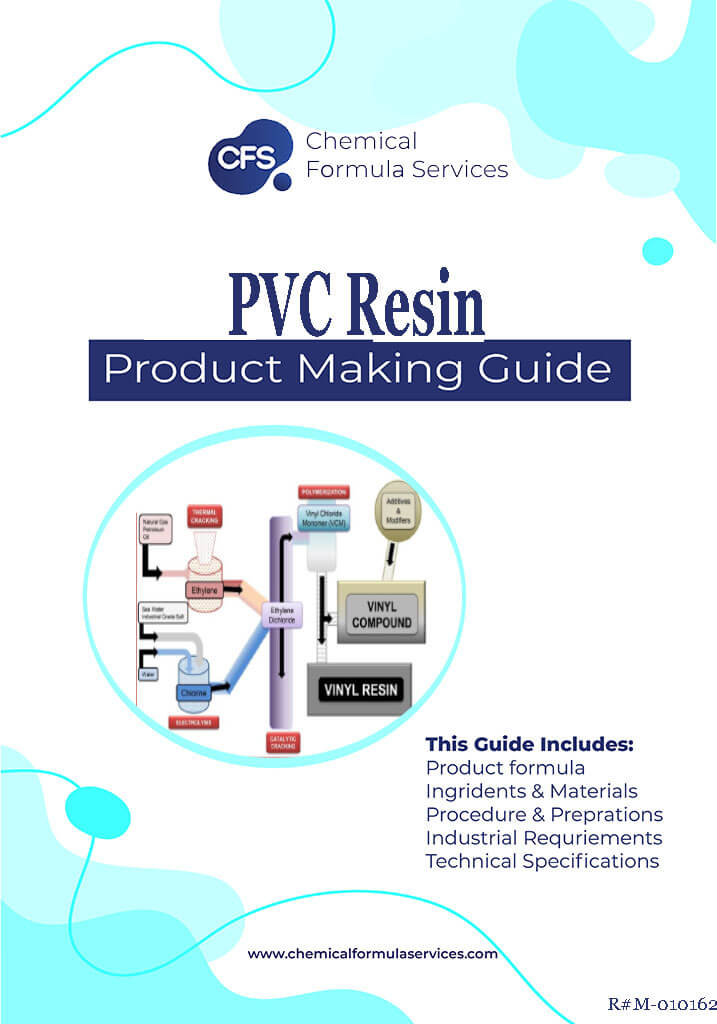
The manufacturing process of PVC (Polyvinyl chloride) resin involves several steps, including polymerization, suspension, and post-treatment processesÊ .How is pvc madeÊ is a big topic but here is a general overview of the PVC making.
\n
View full details
PVC Resin Manufacturing
\n-
\n
- Vinyl Chloride Monomer (VCM) Production: The first step is the production of vinyl chloride monomer (VCM), the raw material used to make PVC resin. VCM is typically produced through the process of thermal cracking or oxidation of ethylene dichloride (EDC). \n
- Polymerization: VCM undergoes polymerization to form PVC resin. There are different polymerization methods, including suspension, emulsion, bulk, and solution processes. The suspension polymerization method is the most widely used for commercial PVC resin production. \n
- Suspension Polymerization: In suspension polymerization, VCM is combined with water and a suspending agent in a reactor vessel. The suspending agent prevents the PVC particles from clumping together and promotes their dispersion in the water. Heat and agitation are applied to initiate the polymerization reaction. \n
- Initiators and Catalysts: Initiators and catalysts, such as organic peroxides or azo compounds, are added to the reaction mixture to promote the polymerization process. They help break the double bonds in the VCM molecules and facilitate the linking of monomers to form polymer chains. \n
- Polymerization Reaction: During the polymerization reaction, VCM monomers join together to form polyvinyl chloride chains. As the reaction progresses, the resin polymerÊ particles grow in size and become suspended in the water. The reaction is typically carried out under controlled temperature and pressure conditions. \n
- Post-Treatment: Once the desired degree of polymerization is achieved, the polymerized PVC particles are separated from the reaction mixture. They are usually washed and subjected to further processing steps, such as drying, milling, and sieving, to remove water and obtain a desire product in powder or granular form. \n
- Stabilization and Formulation: PVC resin making process is then subjected to stabilization processes. Stabilizers are added to prevent the PVC from undergoing degradation due to heat or light exposure. Other additives, such as plasticizers, fillers, pigments, and lubricants, can be incorporated during formulation to tailor the properties of the product for specific applications. \n
Resin Packaging and Distribution
\n-
\n
- The final PVC resin product is typically packaged in bags or containers and then distributed to manufacturers who use it as a raw material in various applications, such as pipes, profiles, films, sheets, cables, and more. \n